As an Amazon Associate this site earns from qualifying purchases.
Quick Picks
| Shoe | What its listing emphasizes | Price |
|---|---|---|
| WILSON Pickle Pro Men's Pickleball Shoe - Black/Infrared/White | Midfoot support for lateral movement, OrthoLite EVA molded sockliner, Duralast high-density rubber outsole | Check Price on Amazon |
| New Balance Women's SmashStep PKL Pickleball Shoe | FuelCell foam for a propulsive feel, Ndurance rubber in high wear areas, supportive upper | Check Price on Amazon |
Disclosure: We earn a small commission from qualifying Amazon purchases at no extra cost to you.
As an Amazon Associate we earn from qualifying purchases. This page contains affiliate links, and we may receive a commission if you buy through them — at no extra cost to you.
As an Amazon Associate, we earn from qualifying purchases.
Last Updated: September 2026

- Midfoot Support: Extra support in the midfoot stabilizes lateral movement and provides additional comfort
- OrthoLite EVA Molded Sockliner: High-density OrthoLite foam offers maximum cushioning and impressive longevity
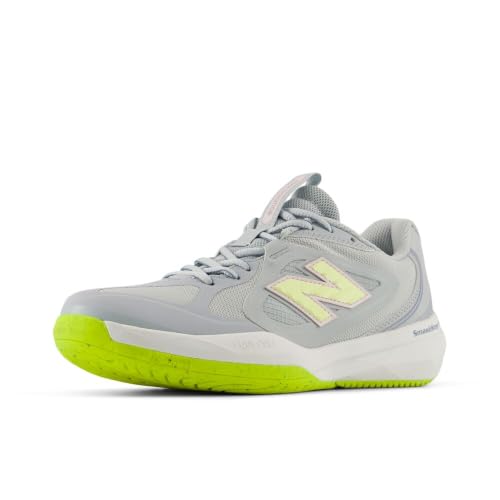
- FuelCell foam delivers a propulsive feel to help drive you forward
- Ndurance rubber outsole is built for increased durability in high wear areas
Quick Answer
These two court shoes are pitched at opposite ends of the same problem. Wilson's listing for the Pickle Pro describes extra support in the midfoot that stabilizes lateral movement, an OrthoLite EVA molded sockliner using high-density OrthoLite foam, and a Duralast outsole built from a high-density rubber compound for abrasion resistance and maximum traction on all surfaces. New Balance's listing for the SmashStep PKL describes FuelCell foam that delivers a propulsive feel to help drive you forward, an Ndurance rubber outsole built for increased durability in high wear areas, and a supportive upper that helps provide a secure fit.
Read that side by side and the split is obvious: one listing sells containment and abrasion resistance, the other sells push-off and lockdown.
One thing to settle before you go further. The supplied product record for the Wilson is the men's model in size 10.5 US, and the supplied record for the New Balance is the women's model in size 8.5. If you searched for a women's pickleball shoe, the SmashStep PKL record is the one that directly matches that search; the supplied Wilson information does not establish a women's version of the Pickle Pro. Shop the gender-specific last you actually need rather than converting sizes across two different models.
Neither supplied listing states a weight, stack height, heel-to-toe drop, warranty length or court-surface certification. So everything below is a reading of published design intent, not a performance measurement.
Full Comparison Table
| Feature | WILSON Pickle Pro Men's Pickleball Shoe - Black/Infrared/White | New Balance Women's SmashStep PKL Pickleball Shoe |
|---|---|---|
| Cushioning named in listing | OrthoLite EVA molded sockliner with high-density OrthoLite foam, described as offering maximum cushioning and impressive longevity | FuelCell foam, described as delivering a propulsive feel to help drive you forward |
| Outsole named in listing | Duralast outsole, a high-density rubber compound for abrasion resistance and maximum traction on all surfaces | Ndurance rubber outsole, built for increased durability in high wear areas |
| Support feature called out | Extra support in the midfoot that stabilizes lateral movement and adds comfort | Supportive upper that helps provide a secure fit |
| Colorway in supplied record | Black/Infrared/White | Light Zinc Blue/Pink Granite |
| Size and sizing line in supplied record | Men's, size 10.5 US | Women's, size 8.5 |
| Weight, drop, warranty | Not stated in the supplied listing information | Not stated in the supplied listing information |
| Price | Check Price on Amazon | Check Price on Amazon |
Design & Build Quality
Underfoot construction
The two listings describe cushioning in different vocabularies, and that matters. Wilson names a specific component — an OrthoLite EVA molded sockliner using high-density OrthoLite foam, which the listing credits with maximum cushioning and impressive longevity. A sockliner is the removable or moulded layer directly under your foot, so that claim is about the part of the shoe most likely to pack out first. The inference worth drawing: Wilson is putting its longevity language where pickleball shoes commonly go soft.
New Balance names a midsole foam family instead. FuelCell foam is described as delivering a propulsive feel to help drive you forward, which is energy-return language rather than durability language. Neither listing publishes a foam density figure, thickness, or durometer, so you cannot rank the two on measured cushioning from the information supplied here.
Upper and support architecture
Wilson's support claim is geographic and specific: extra support in the midfoot that stabilizes lateral movement and provides additional comfort. On a pickleball court, where you shuffle sideways and brake hard at the kitchen line, midfoot containment is the thing that keeps your foot from sliding over the footbed during a cut.
New Balance's support claim is broader: a supportive upper that helps provide a secure fit. That is a whole-foot statement rather than a zone-specific one. Honestly, "supportive upper" is the vaguer of the two claims — it does not tell you whether the support comes from overlays, a midfoot cage, a heel counter or the lacing. If zone-level lateral stability is your priority on paper, Wilson's wording is the more explicit of the two. Neither description establishes actual stiffness or fit, which varies by foot shape.
Preferred on published detail: Wilson, purely because the listing names the support zone. That is a documentation advantage, not a proven performance advantage.
Features & Functionality
Both shoes are single-purpose court shoes, and each listing names a proprietary-sounding outsole rubber. The difference is scope.
- Traction claim scope. Wilson's Duralast outsole is described as a high-density, durable rubber compound providing abrasion resistance and maximum traction on all surfaces. "All surfaces" is a broad claim from the listing; treat it as the manufacturer's positioning rather than a certified result for every court you will play on.
- Durability claim scope. New Balance's Ndurance rubber outsole is described as built for increased durability in high wear areas, which reads as targeted reinforcement rather than a full-coverage compound statement. The listing does not say which areas those are.
- What is missing from both. Neither supplied listing states a non-marking designation, a tread pattern, an indoor-versus-outdoor recommendation, or a midsole plate. If you need a gym-approved non-marking sole, confirm that with the manufacturer for your exact size and colorway before buying.
Performance
Look — nobody here played in either of these shoes, and this site does not do product research, so treat this section as spec interpretation.
If you are a banger who lives on explosive third-shot drives and forward sprints, New Balance's FuelCell language is aimed squarely at you: foam marketed for a propulsive feel that helps drive you forward implies a springier ride tuned for acceleration. The honest caveat is that propulsive foams and hard lateral braking are sometimes in tension, and the supplied listing does not publish torsional rigidity or a stability feature to offset it.
If you grind out dinking rallies and wear through the same patch of outsole every month, Wilson's combination reads better on paper: midfoot support aimed at lateral movement plus a high-density rubber compound marketed for abrasion resistance. High-density rubber is typically the trade-off choice — more abrasion life, less initial grip bite than a soft compound — though neither listing publishes a rubber hardness figure, so that remains an inference.
Verdict on performance: not established by the supplied data. The two records describe different priorities without any shared measurement to rank them against.
Price & Value
Neither shoe's value can be called cheaper or more expensive here, because court-shoe pricing moves constantly and offers are handled separately from this article. Check current price on Amazon for both before you decide.
What you can judge is value language. Wilson's listing explicitly ties its sockliner to longevity, and its outsole to abrasion resistance — two claims pointed at cost per month of play. New Balance's listing ties durability specifically to high wear areas. If you destroy shoes on rough outdoor concrete, read both of those claims closely and weigh them against whatever the current prices are. For broader setup budgeting, see our pickleball court setup guide.
WILSON Pickle Pro Men's Pickleball Shoe - Black/Infrared/White — Best for players who want midfoot stability and abrasion language spelled out
The case for this one is written plainly into the listing: extra support in the midfoot stabilizes lateral movement and provides additional comfort, the OrthoLite EVA molded sockliner uses high-density OrthoLite foam for maximum cushioning and impressive longevity, and the Duralast outsole uses a high-density rubber compound for abrasion resistance and maximum traction on all surfaces.
Strengths on paper
- Support is described by zone, not just as "supportive"
- Longevity language attached to both the sockliner and the outsole compound
- Traction described across all surfaces by the listing
- The supplied record covers one colorway (Black/Infrared/White) and size 10.5 US in men's sizing; a women's version is not established by the supplied listing information
- Weight, drop and warranty are not stated in the supplied listing information
New Balance Women's SmashStep PKL Pickleball Shoe — Best for women's-sizing shoppers who want propulsive foam and a secure upper
This is the record that actually matches a women's pickleball shoe search: the supplied listing is the women's model in size 8.5, with FuelCell foam for a propulsive feel, an Ndurance rubber outsole built for increased durability in high wear areas, and a supportive upper for a secure fit.
Strengths on paper
- Women's-specific model and sizing in the supplied record
- Foam marketed for forward drive, which suits aggressive, attacking play styles
- Outsole rubber reinforced where wear concentrates, per the listing
- "Supportive upper" is not broken down by zone, so lateral containment detail is thinner than Wilson's description
- Weight, drop, warranty and surface recommendation are not stated in the supplied listing information
Which Should You Buy?
- You need a women's court shoe, full stop. Take the New Balance Women's SmashStep PKL Pickleball Shoe — it is the women's model in the supplied records, and the Wilson record here is men's.
- You slide your foot around inside shoes on hard lateral cuts. Wilson's midfoot support claim is the only zone-specific stability language between the two records, so that listing speaks to your problem directly.
- You play attacking, drive-heavy pickleball. FuelCell foam's propulsive positioning is aimed at forward acceleration.
- You grind out long dink rallies on abrasive outdoor courts. Wilson's high-density Duralast compound and its abrasion-resistance claim are the relevant lines to weigh.
- You want to compare on weight or drop. Neither supplied listing publishes those numbers, so ask the manufacturer before you commit.
- You are unsure about sizing. The supplied records do not include fit guidance, so use the manufacturer's size guide for that exact model and colorway rather than guessing across brands.
How We Research
This comparison was built by reading two Amazon Creators API verified product records and the product listing feature bullets attached to them, both retrieved on 11 September 2026. Each specification was checked against its own ASIN — no feature was carried from one shoe to the other, and no number was added from memory. Where a field is absent, this page says it is not stated in the supplied listing information rather than treating the gap as a zero. If you want recall history on any consumer product before buying, the CPSC publishes a public recall database.
Final Verdict
If I had to name a single sharper spec sheet, it is Wilson's: three named technologies, one of them located by zone, with longevity language attached to the two parts that wear out first. That is the more informative listing of the two.
But the practical answer is sizing, not spec-sheet depth. The supplied Wilson record is a men's shoe in 10.5 US; the supplied New Balance record is a women's shoe in 8.5. Buy the one built on the last you need, then use the feature differences — midfoot containment and abrasion resistance versus propulsive foam and targeted outsole reinforcement — to decide whether your game is defensive grinding or forward drive. Anyone wanting more on gear pairings can read our pickleball paddle buying guide.
Frequently Asked Questions
Which shoe has the more durable outsole? Not established by the supplied data. Wilson describes a Duralast high-density rubber compound for abrasion resistance and maximum traction on all surfaces, while New Balance describes Ndurance rubber built for increased durability in high wear areas — two durability claims with different scopes and no shared measurement.
Which one is better for quick lateral movement? Wilson's listing is the only one of the two that names a support zone, citing extra support in the midfoot that stabilizes lateral movement. That is a design-intent advantage on paper, not a tested result.
Can either be used on outdoor concrete courts? Wilson's listing claims maximum traction on all surfaces, and New Balance's listing does not specify a surface. Treat surface suitability as a manufacturer question for your exact model before buying.
What kind of cushioning does each use? Wilson specifies an OrthoLite EVA molded sockliner with high-density OrthoLite foam; New Balance specifies FuelCell foam for a propulsive feel. Neither listing publishes foam thickness or density in the information supplied here.
Do these listings say how much the shoes weigh? No. Weight, heel-to-toe drop and warranty length are not stated in the supplied listing information for either shoe.
Which is cheaper? Court-shoe pricing changes too often to pin down in an article. Check current price on Amazon for both before deciding.
Sources & Methodology
Nobody at this website wore, flexed, weighed or lab-rated either of these shoes; there is no test court and no instrumentation behind this page. What exists is a close reading of two Amazon Creators API verified product records and their product listing feature bullets, both retrieved on 11 September 2026, compared only on attributes that both listings actually publish. For court shoes that is enough to tell you what each brand built the shoe to do — midfoot containment and abrasion resistance versus propulsive foam and reinforced wear zones — and enough to tell you that fit, weight and long-term wear remain open questions you should resolve with the manufacturer's own size and spec guidance.